

Please don’t outsource your WHY to AI
Purpose isn't a problem to solve for; it's a process

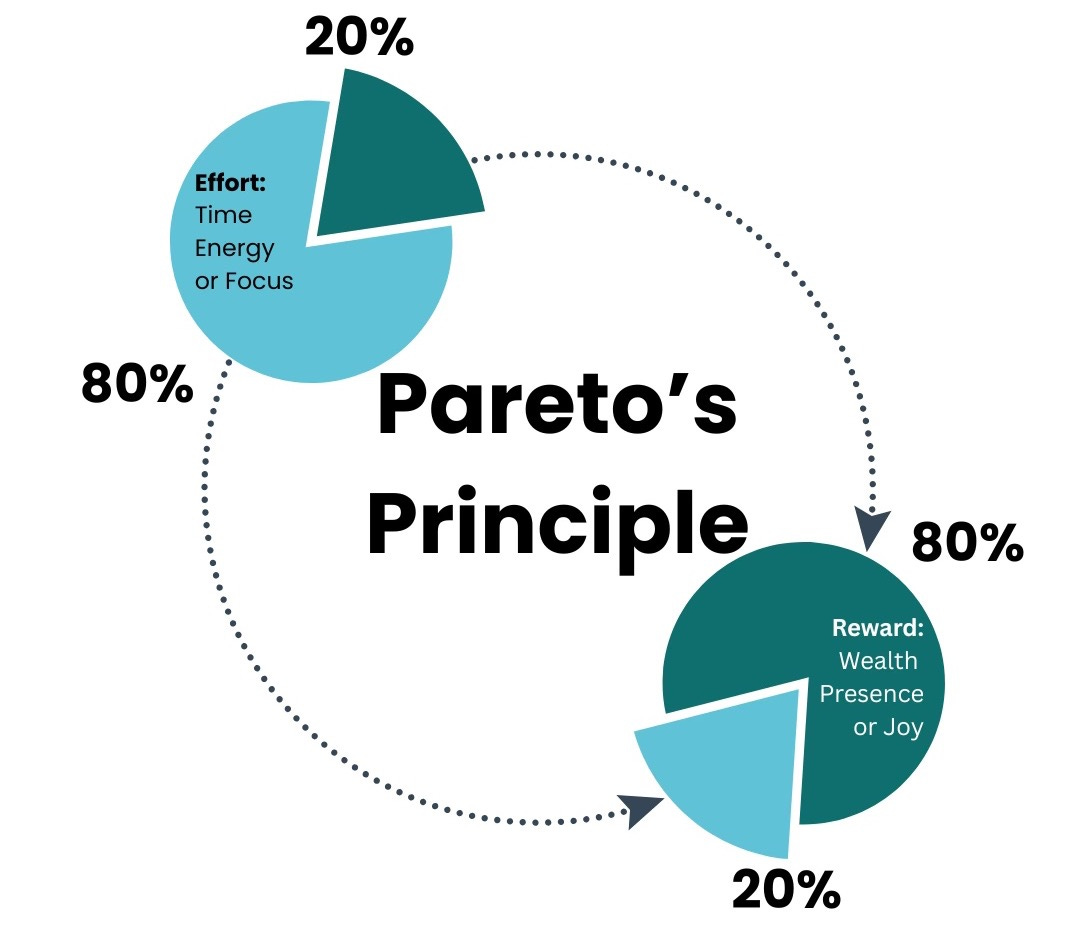
I’ve been thinking a lot about Pareto’s principle. The idea that most of us spend 80% of our time focused on the tasks that create 20% value-add in our lives. The low-hanging fruit tasks, or the things that disproportionately create less wealth, joy or purpose relative to the time and energy they take. Recently, I’ve been trying to flip this on its head by spending more time on the 20%. The tasks, projects and passions that bring me the most value-the 80%- whether that be wealth, presence or joy. It feels like a go hard or go home approach to time management. Being laser-focused on what adds the most value and cutting out the rest. Yet, in my pursuit of the elusive 20/80, I’ve intentionally avoided using AI. So, I hope you enjoy finding any mistakes in this article. I’m proud to say that this baby was typed by hand (and old-fashioned spell check!)
Working faster, not smarter
‘Doing more with less’ is the sentiment coming out of practically every organisation I work with. Which may seem like a great thing. Bloated, disconnected and inefficient corporations are switching to streamlined ways of working to enhance cross-collaboration, alignment and communication. This radical shift is due in no small part to the introduction of AI across almost every area of business. Yet, when I speak with leaders, I notice the shift isn’t trending towards working smarter. Instead, it seems we’ve moved from working harder to working faster. But faster and smarter are not the same thing. Our perceived effort with AI is leading to a scatter-gun approach to work. We have so many tabs open, infinite rabbit holes to go down, that our consciousness has become dispersed, disconnected and overwhelmed. It makes me think of Viktor Frankl, who in his ‘Man’s Search for Meaning’ writes that: “those who have a WHY to live can bear almost any how.” I don’t think Frankl was suggesting that we could have hundreds of WHYs open on our desktop all at once. When we have so many WHYs for our work and lives, do we dilute the ones that really count? And also, can they even be our WHYs when we’ve been given them by AI?
Outsourcing the 20%
Let me give you an example. My client, ‘Greg,’ wants to explore his leadership in our sessions and is eager to be promoted to Director. But he can’t explain WHY he wants it. He seems dumbfounded when he recognises the only reason for pushing for promotion is that it’s the most obvious next thing to do. Next week, Greg comes into our session full of energy, excited to tell me that he’s connected to his purpose for promotion. My heart sinks when he shares that ChatGPT helped him to come up with these answers. There’s no denying that AI has provided Greg with some excellent examples that would read well on a mid-year review. But they are not his WHY. They feel disconnected and somewhat dead inside. I want to hear from Greg. I want him to grapple with the messy, inconsistent, irrational nature of being human- not this HR-speak with its straight lines and smoothed-over edges. Working with your WHY can help you to flip Pareto’s principle on its head. If you can connect with your WHY each day, you’ve supercharged your internal satnav with purpose and direction. Because ultimately, most people don’t know WHY they are doing what they are doing. And that’s what leaves them wasting time and energy on tasks, people, or projects that leave them unproductive, disconnected, and depressed. When we substitute working harder for working faster, we are simply playing another version of the same game. Chasing time and replacing purpose with busyness.
Plastering Complex Problems with Complicated Solutions
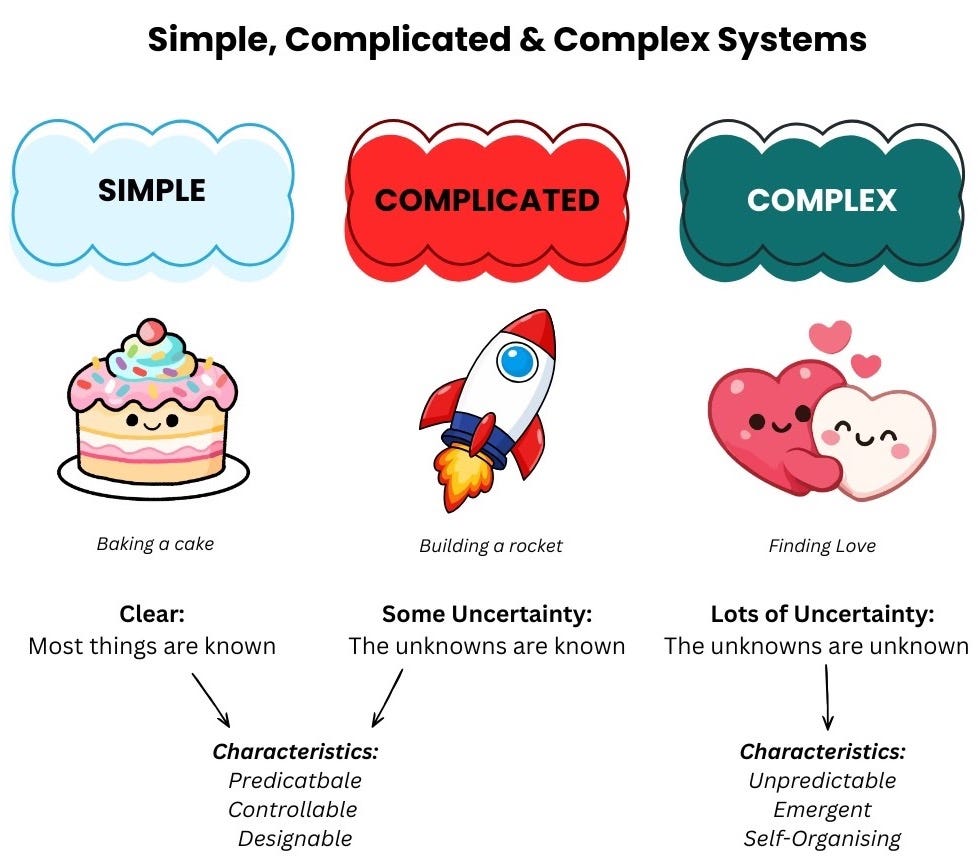
The problem with using AI to find our purpose is that it offers us complicated solutions to what are, in fact, complex problems. Complicated problems are closed-loop systems, like building a jet engine. Complicated, yes. But once it’s been done, the loop is closed. The problem is solved. Complex problems, such as organisational culture, love, and, of course, purpose, are not closed-loop issues. They are multi-factorial and in a constant state of emergence. In fact, maybe seeing them as issues or ‘problems to solve for’ is part of the problem. There’s no solution to love (although many dating apps will tell you otherwise). It’s an emergent relational process. Like a garden, love needs constant tending to. So yes, AI can give you a powerful purpose statement. But this is simplistic and soulless storytelling that broad-brush strokes over the nuance and wonder of our lives. Purpose isn’t an answer; it’s a process. And by outsourcing this to AI, you’ve kind of missed the point.
Navigating 80/20
When you can connect to the WHY of a situation, it acts as a compass for navigating life. It’s our way of working out what’s a ‘junk food’ life focus and what’s a ‘whole food’. A way to decipher where to spend our most precious resources: our time, energy and focus. Without our compass, it becomes impossible to tell.
AI isn’t the problem; we are. AI is just another way to busy and distract us from life’s big questions. So, if you get AI to do anything for you, please let it be the 80%. So that you can spend your days focused on the important stuff, and perhaps most importantly, the WHY you do what you do.
Thank you for reading. I hope you enjoyed these thoughts, and I’m looking forward to writing more over the coming months.
Love this!